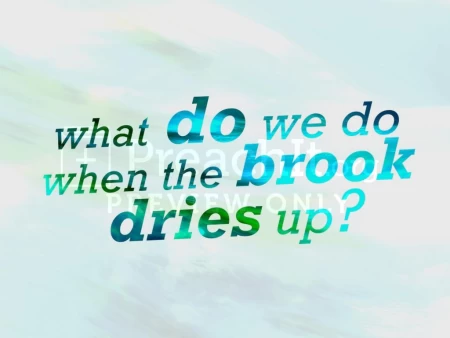
What Do We Do When The Brook Dries Up?
What Do We Do When The Brook Dries Up? speaks to believers whose familiar source of strength or provision has changed. Beginning with Elijah at Cherith in First Kings 17, this sermon explores trust during a dry season. It asks how we respond when obedience leads into uncertainty.
What Do We Do When The Brook Dries Up? gives ministers a picture for teaching dependence on God. Victor Vera follows Elijah from public confrontation into a hidden place of preparation. The message invites hearers to consider the value of faithfulness when no audience is watching.
However, a difficult season does not automatically mean that God has rejected us. The sermon challenges that assumption and directs attention toward what believers can learn while waiting. Prayer, humility, obedience, and trust become part of its call to maturity.
For those preparing a sermon on trials, ministry preparation, or changing seasons, What Do We Do When The Brook Dries Up? offers a central question. Its account of the ravens and the shrinking stream helps explain the tension between yesterday’s provision and today’s need. Furthermore, the message distinguishes trusting God from depending entirely on one channel.
This outline can encourage people who feel overlooked, unsettled, or unsure of their next step. It urges them to keep their relationship with the Lord central. Therefore, ministers can use it to invite prayer and reflection on the hidden habits that sustain public service.
Preach What Do We Do When The Brook Dries Up? when your congregation needs encouragement to remain faithful through uncertainty. Use Elijah’s story to connect trust with preparation and a willingness to follow God’s direction. What Do We Do When The Brook Dries Up? reminds hearers that a changed circumstance need not end their walk and calls them to seek the Lord for the next step.